2 min read

Why Brand Sentiment and Reputation Matter

Why Brand Sentiment and Reputation Matter

When we asked marketing leaders at organizations serving public safety what their biggest marketing and communications priorities are, we weren’t surprised that they put “brand awareness” at the top of the list (99% said it was either “very important” or “important” to them). That was refreshing and reassuring.

But humans are not always rational. 

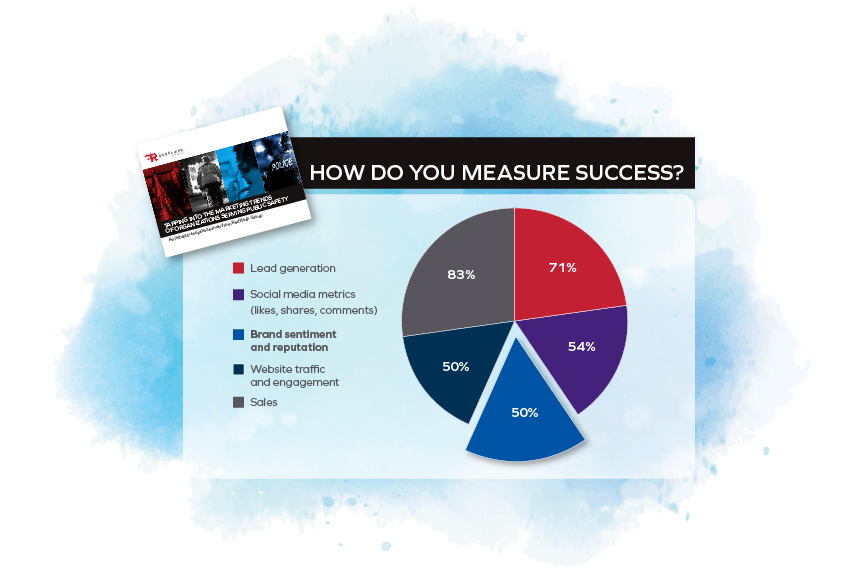
When we asked later in that same survey how they measure marketing success, only about half of respondents (the second-to-last answer!) said they paid attention to brand sentiment and reputation. That perplexed us: Why wouldn't you measure the area that's most important to you?

The number-one way marketers said they measured success was (no shocker here) sales. But that’s not enough. Many factors—from brand awareness to qualifying an incoming lead to closing the sale—contribute to the success or failure of your marketing efforts. 

It may be that many marketers believe it’s just too hard to measure brand awareness. But this is something we’ve done successfully. You can start by setting key performance indicators (KPIs) that align with the goals in your marketing plan—metrics like seeing a boost of X% in website traffic or measuring eyeballs on a key piece of messaging collateral. Some of our Redflash Group clients need to start by understanding what their target audience(s) really think of them and then shift and align their brand messaging to both internal and external stakeholders. 

We’ve helped many of our clients with a brand awareness benchmarking survey. This is administered to a target audience(s), and then repeated 12 months later to gauge how campaigns, paid media and search, sponsorships, etc., have moved the needle. This typically costs less than you’d think, and provides another way of measuring the effectiveness of your efforts. 

As tempting as it is to use sales as your main (or even your only) focus, it’s simply too little to provide a nuanced, in-depth picture of what’s driving your success (or lack thereof). Social engagement can give you near real-time insights as to what your customers and prospects are thinking and asking about. Conversions on a key landing page can tell you where people fall off the journey toward buying or asking for a demo or more information. And measuring “share of voice” can give you a sense of where you fit among your competitors. These all matter–-along with sales.

So don’t forget to include regular assessments to be sure you understand how current and would-be customers feel about your brand and whether they trust you and your products. 

Download the full survey results in our new Ebook, “Tapping Into the Marketing Trends of Organizations Serving Public Safety.”

Using Referrals to Drive Sales

2 min read

Using Referrals to Drive Sales

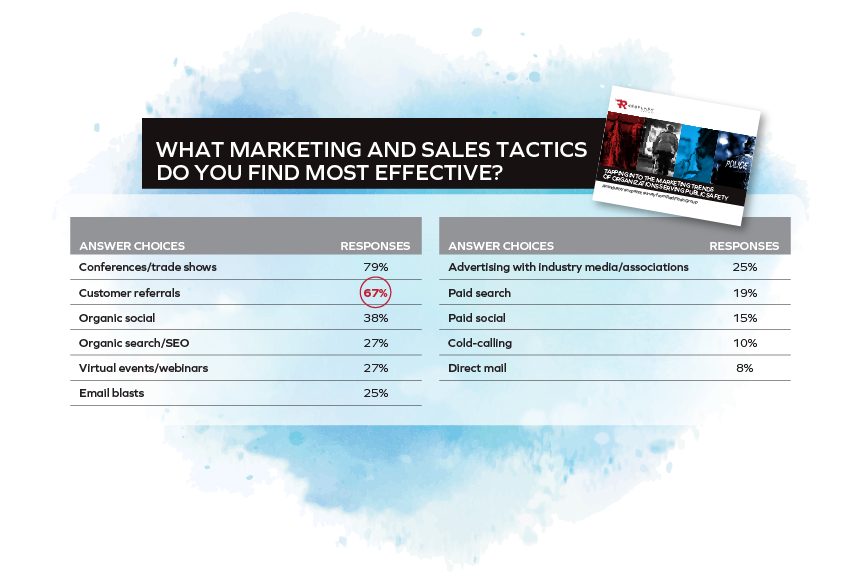
In our recent survey marketing leaders told us that conferences and trade shows are their most effective marketing and sales tactic, but...

Read More
PEER PROOF: How to Build Trust and Credibility Through Customer Stories

6 min read

PEER PROOF: How to Build Trust and Credibility Through Customer Stories

What are the first things you do when deciding on where to have dinner or which TV to buy? Read the reviews. Maybe ask your friends what they...
Read More
Measure ROI to Improve Marketing Results

3 min read

Measure ROI to Improve Marketing Results

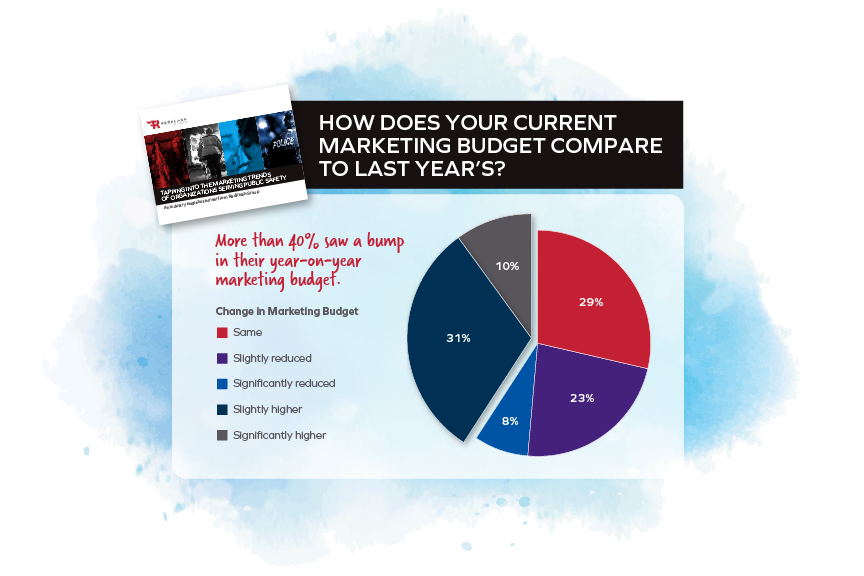
More than 40% of the senior marketing managers who took our recent survey said their current marketing budget was bigger than the previous...

Read More