5 min read
How to Dial in Your Marketing Budget for Public Safety
Hockey legend Wayne Gretzky once said: “Skate to where the puck is going, not to where it has been.” It’s an adage that inspires forward...
4 min read
Jake Knight : Sep 25, 2020 9:00:00 AM
It’s tempting now to hunker down, cut budgets and simply wait it out. But before you settle into your bunker, consider that this is actually an ideal time to increase your brand value by investing even more in your marketing efforts. Which doesn’t necessarily mean spending more. Once the economy recovers—and it will come back—the value you create now will translate into more sales and greater market share.
If you don’t believe me, consider this: In the most recent recession, which kicked in around December 2007, the vast majority of companies suffered greatly. McDonald’s, though, saw its sales grow in 2008; they even beat sales in both 2006 and 2007. Instead of retrenching and shuttering restaurants, the company opened almost 600 new stores in 2008.
During the Great Recession, McDonald’s earnings-per-share grew by 26% in 2008, 8% in 2009, and 16% in 2010. Why? They never stopped improving what they were offering and making sure the world knew about it. In a recent Forbes survey McDonald’s was ranked the 10th most valuable brand in the world.
The key to making this mind shift is this: See your marketing dollars as an investment rather than an expense. What you’re investing in is the future brand value of your company. Increased brand value means that your customers perceive what you’re offering to be of higher quality and greater worth. How do customers show that?
When customers who value you have hard choices to make, they’re less likely to give you up. And, when the hard times—like, say, a pandemic—are over, the odds are that those customers will come right back to buying from you, their first choice.
Companies that invest in their brand during downturns are essentially buying market share at discounted prices when compared to competitors who don’t make those investments.
So how, exactly, do you build greater brand value and increase your market share, especially in a down market?
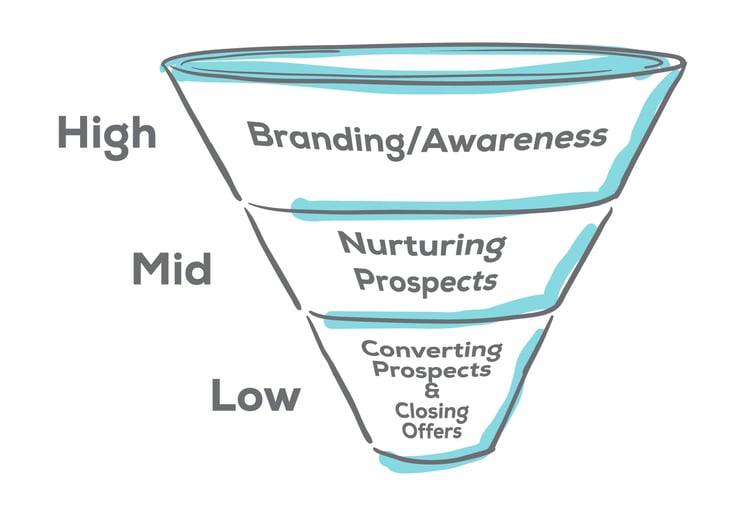
Start by considering the classic marketing funnel. Top-funnel activities are about building awareness and positioning for your brand, while mid-funnel activities nurture your prospects. Lower-funnel actions aim to convert prospects into customers. Basic marketing stuff.

The challenge we all face is how to allocate funding into each area. In the Great Recession, we saw clients shift focus down the funnel, in an effort to drive sales. At the same time, we had other customers who focused on building their brand through thought leadership. We think you can do both, even on a reduced budget, but the type of product/service you offer and your sales cycle have implications.
Because public safety tends to have long sales cycles, prospects for your products may be in the sales funnel for two to three years. Not surprising for products that tend to be expensive, complex and involve specific procurement requirements. That might give you a unique opportunity to focus on top-and mid-level funnel activities. This will build awareness and interest so more prospects will consider your brand.
This is a strategy that can pay huge dividends downstream. Companies whose purchase decisions are by nature longer, or those that are holding off due to budget constraints, will eventually emerge. They have to and what you do in the meantime will make you their first choice—or not.
So what’s the ideal blend of marketing strategies up and down the funnel that preserves your long-term upside, sharpens lead generation and conversion to prop up near-term sales—and does all that without breaking the bank? Here are some tactics we’ve seen work:
Especially in an economic downturn, marketers feel intense pressure to justify spending. That leads too many to try to “prove” ROI for a campaign in as little as a month—even though the average B2B sales cycle is six months or more. Here’s the remedy: Adopt a long-term measurement mindset that follows your sales cycle and clearly defines the difference between ROI and KPIs. Don’t jump the gun and measure before you’ve completed an entire sales cycle.
5 min read
Hockey legend Wayne Gretzky once said: “Skate to where the puck is going, not to where it has been.” It’s an adage that inspires forward...

2 min read
If money is on your mind, you’re definitely not alone. When asked about their number-one challenge in 2022, 30% of B2B marketers surveyed by ...
3 min read
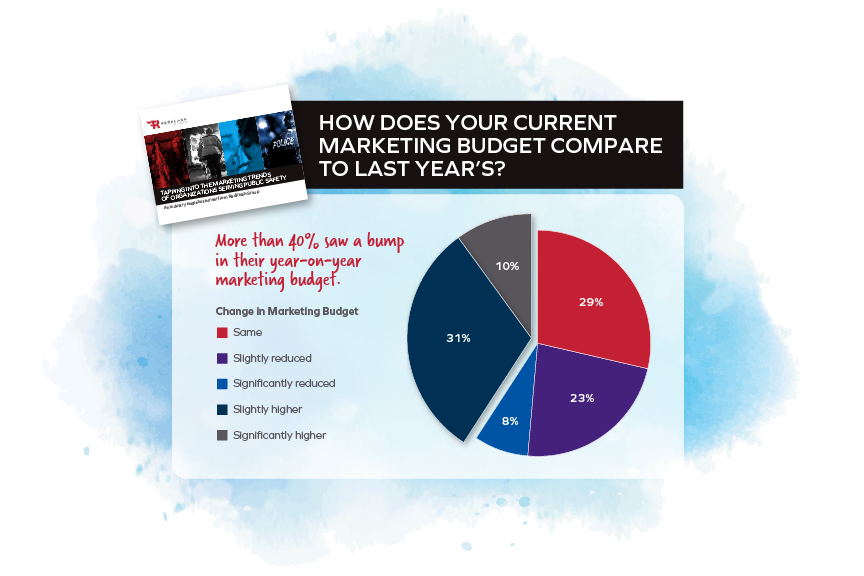
More than 40% of the senior marketing managers who took our recent survey said their current marketing budget was bigger than the previous...